A field handbook for the Vanilla+ server
CALLINGS
Five callings. One voice. Speak, and the world answers.





Showcase · Wiki · Handbook — Callings 0.6
This is a working handbook: everything you need to start, a page for every calling, and a field guide to what waits in the Delves and beyond. One chapter is deliberately incomplete.
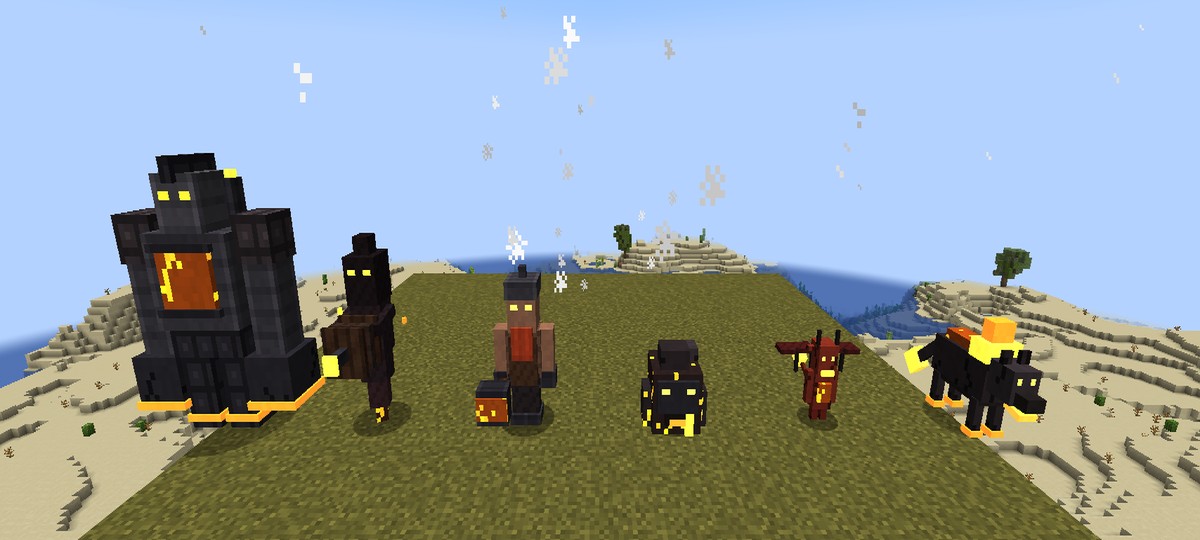
You do not learn spells in Callings. You learn words, and then you say them out loud.
Join with the server's usual Fabric profile. AutoModpack notices anything new, downloads it and asks you to restart Minecraft once. After that you are up to date. When the modpack changes again, the same thing happens.
Press K (or use a Calling Stone) and pick one of five callings. Each one has its own resource, its own words and its own skill tree. You can change later, but your progress belongs to the calling you level.
Hold B (push-to-cast) and say a word clearly: "fireball", "slam", "rise". The recognition runs entirely on your own PC; no audio ever leaves it. Only the word you said is sent to the server.
Every calling starts with one word. The rest are learned as you level and through the skill tree. The Codex (J) always shows which words you know and which are coming.
Hold R for the ability wheel and release over an ability. Quick-cast keys 1 to 4 can be bound under Controls › Callings. Every mechanic that listens to your voice also accepts a key press.
The Warrior roars instead of speaking, and the Bard can simply hum.
Top left: your calling, level and resource bars, plus the voice status line. When you hold B it shows what was heard. Right side: the words you know, with their cooldowns. The minimap lives in the top right corner.
The Codex (J) is the book inside the game: your path and quests, every ability with its exact numbers, the Delves and their creatures, the bosses, duels and PvP. When this handbook and the Codex disagree, believe the Codex. It is always up to date.
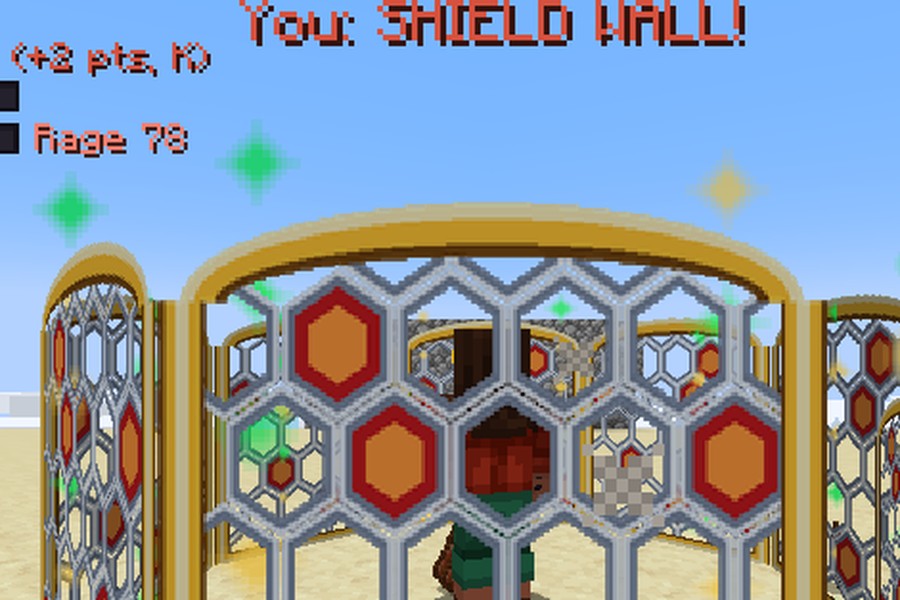
The Warrior stands in front and makes noise. Rage builds when you strike hostile foes and when you are hit, and it fuels every word. Out of a fight it settles at a small reserve, so you can always open with a slam. The Warrior's signature is the roar: hold the key and roar into your mic. The longer the roar, the higher its tier.
| Word | What it does | From |
|---|---|---|
| roar | Roar into the mic: Strength and Resistance, enemies hurled back. Longer roar, bigger tier. | start |
| break | Your next hit sunders armour (−30%) and deals +20%. | lv 3 |
| slam | Leap and crash down: 1.3× weapon damage in 5 blocks, enemies thrown into the air. | lv 5 |
| fight | Allies get Strength and Speed for 8 s, under a war banner. | lv 8 |
| whirlwind | Spin like a blade storm for 2 s, pulling everything in. | lv 12 |
| shield wall | Resistance III for you and allies within 6 blocks. | lv 16 |
| charge · come here | Dash through enemies · pull every mob onto you. | tree |
| berserk · together | Red Mist at full Rage · heal and refill the whole party. | tree, 30 |
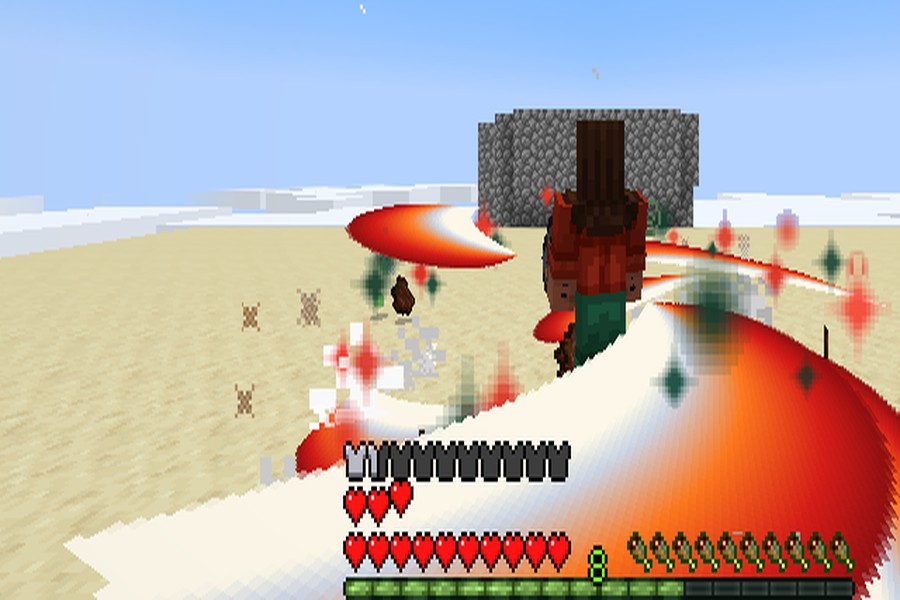
Hit first and keep hitting: Rage only comes from real fights, not from cows. Save "shield wall" for the boss's big telegraphed hit, and open every fight with "slam" from your reserve.
At the end of the Warrior's road there is a word that makes the world look small.
The Mage is a budget and a temperature. Mana refills slowly while you fight and quickly once you stop casting for five seconds, so every fight is a budget. Every spell adds Heat: above 50 your spells hit harder, but at 100 you vent, silenced and burning. Frost spells make almost no heat; they are how a good Mage cools down.
| Word | What it does | From |
|---|---|---|
| spark | A free filler bolt. | start |
| fireball | Explosive fireball that splashes and scorches the ground. Soft blocks give way. | lv 3 |
| freeze | A blizzard cone: enemies are frozen solid in ice for 2.5 s. | lv 6 |
| barrier | Absorb 8 damage for 6 s. | lv 9 |
| ice wall | A real wall of ice, 5 wide and 3 high; it melts after a while. | lv 12 |
| lightning | A bolt at your target that chains to two more. | lv 15 |
| flame wave · blink | A cone of fire · teleport ten blocks. | tree |
| meteor · inferno | One burning meteor · from level 25, a whole sky of them. | tree, 25+ |
| absolute zero · rewind | An 8-block freezing nova · snap back to a moment six seconds ago. | tree, 30 |
Freeze first, then fireball the frozen. Watch Heat, not just Mana: cast frost when it nears 100. Between fights, stop for five seconds and let the mana flood back.
Meteors and similar spells land where your crosshair points. While you hold B, a glowing ring shows the spot.
The last thing a Mage learns is not how to make fire. It is how to make something stop existing.
The Necromancer fights with tenants. Souls come from enemies that die nearby. Your own kills and your minions' kills always give one, elites and bosses give three, and one more trickles in on its own. Raising the dead costs Souls and takes minion slots. Minions follow you, defend you and attack whatever you attack.
| Word | What it does | From |
|---|---|---|
| bolt | A free Soul Bolt. | start |
| rise | Raise Bone Thralls, two at once if you have the slots. | lv 3 |
| decay | A withering cloud ahead of you. | lv 6 |
| fear | Everything within 10 blocks flees. | lv 9 |
| sacrifice | Detonate your nearest minion: you heal, enemies burn. | lv 12 |
| guard · archer | Raise a Rot Hauler (tank) · a Grave Archer (ranged). | lv 14 · 18 |
| legion · colossus · curse | Spend every Soul on thralls · a Bone Golem · +20% damage taken. | tree |
| army · feast | The graveyard opens: a whole army rises · devour your minions for power. | tree, 30 |
Bone Thralls swarm, Rot Haulers hold the line and pull aggro, Grave Archers shoot from behind, and a Bone Golem takes three slots and a lot of punishment. Slots grow as you level.
Let your minions take the kills; every one of them pays a Soul. Raise before the fight, sacrifice the weak ones yourself, and keep a Soul or two for an emergency "rise".
The Landlord's last word is a door in the sky, and nothing near it stays on the ground.
The Ranger is patience with a bow. Focus (five pips) builds while you stand still or sneak, and with every arrow that hits. Abilities cost one to four Focus and have their own cooldowns. Bows grow stronger with every tier.
| Word | What it does | From |
|---|---|---|
| mark | Your target glows and takes +20% damage from everyone. | start |
| roll | Dodge five blocks with a moment of protection. | lv 3 |
| snare | Root your target in place for 3 s. | lv 6 |
| vanish | Invisible for 5 s; mobs lose track of you. | lv 9 |
| hawk | Your hawk circles above, reveals every enemy nearby and dives at them. | lv 12 |
| volley · trap · call | A fan of arrows · a field of stakes · your wolves and horses come to you. | tree |
| arrow rain · net · pack | A storm of burning arrows · root everything near · two spirit wolves. | tree, 30 |
Mark, then shoot. Stand still between bursts to refill Focus, and keep "roll" ready for the moment something reaches you. The hawk reveals the invisible too.
Tamed wolves and horses are part of the kit: "call" brings them to your side with speed and protection.
One day the Ranger will look down at the hunt from very, very high.
The Bard plays the fight. You hear a click on every beat, and a beat bar sits above your hotbar. Hit or cast on the beat to build Tempo; off the beat it drains. From 4 Tempo your chosen song plays by itself for the whole party, and at 8 it is empowered.
Every on-beat action in a row adds a step to your Groove, up to 16. Each step makes your on-beat hits stronger, and every fourth sends a shockwave of notes around you. At 4, 8 and 12 steps the beat speeds up, from 1.2 s down to 0.7 s. Miss a beat, or skip two, and the Groove breaks and the music slows down again.
| Word | What it does | From |
|---|---|---|
| anthem | A song: Strength for allies. | start |
| march | A song: Speed and Haste. | lv 4 |
| ballad | A song: Regeneration. | lv 7 |
| discord | Enemies nearby are confused and attack at random. | lv 10 |
| lullaby | A song: slows and weakens enemies. | lv 13 |
| note · crescendo · mock · encore | A sharp note · a burst at full Tempo · enemies fight each other · buffs last longer. | tree |
| hymn · requiem · masquerade | Halve cooldowns · nobody near you can die · the party vanishes. | tree, 30 |
Pick the song before the fight, then let the beat drive everything you do. Humming keeps your Tempo while you reposition. A long Groove is the strongest thing a Bard brings.
Every Bard is writing the same song. Very few ever reach its last verse.
Thirty levels, three trials, and at the end, yourself.
Killing things gives experience, but farming the same creature over and over gives less and less. New things pay well: the first kill of every creature type gives a large bonus, and so does discovering new biomes and structures. Each level unlocks words and gives skill points for the tree (K).
At levels 10, 20 and 30 you receive a Sealed Trial Sigil. Craft a Trial Altar (gold ingots over stone bricks around a Calling Stone), place it and use the sigil on it. You are taken to an arena to face a boss made to test your calling. Friends standing in the circle may watch from the gallery, but cannot help. A won trial gives Class Seals for your gear; a lost one only costs time.
| Calling | Level 10 | Level 20 |
|---|---|---|
| Warrior | The Iron Bull | The Howling Captain |
| Mage | The Kettle Golem | The Twins of Opposite |
| Necromancer | The Gravedigger | The Evicted Lich |
| Ranger | The Ghost Stallion | The Phantom Matriarch |
| Bard | The Heckler | The Siren of the Drowned Choir |
The last trial is the same for everyone, and different for everyone. You face a shadow copy of you: your calling, your weapon, your skill tree, your words in a distorted voice. It mirrors what you cast a few seconds later, so your favourite combo becomes its favourite combo. Halfway through, it steals one of your words.
Beat it, and your capstones open. And something else wakes up, something no page of this handbook will describe. See Chapter VII.
The great bosses of the world (Chapter V) drop the relics that the next tier of class gear needs: iron to diamond, diamond to netherite, and beyond.
Six dungeons outside the world, built fresh for every run. Each one has its own creatures, its own trick and one shared chest at the end.
A Delve opens with its own key. 5 Key Fragments plus the Delve's ingredient craft a Copper Key. Fragments drop from monsters everywhere. Creatures in a Delve's home biome may drop its Copper Key directly, and trials and bosses give keys for Delves you can already enter. Copper, Iron and Gold keys open the same Delve at higher difficulty with better loot.


 Copper · Iron · Gold
Use the key on a Delve Gate; after a countdown the party is taken inside. Three floors of big halls, each one sealing its doors while it fights. Waves come in, the floor plays its trick, and when the last foe falls the doors open. A Guardian holds each stair; the last floor ends in the boss's hall, and behind it the vault.
| Shrines | Reach one and you wake there when you fall. |
| Revives | The party shares 2 + party-size revives. A downed player wakes after 10 s. |
| Wipes | If nobody is left standing in a hall, it resets: the doors open and the fight waits for you. |
| Losing | No revives left and everyone down: the run is lost, and so is the key. |
| The vault | One shared chest, a lot inside: building blocks in bulk, enchanted tools, weapons and armour, class gear, the Delve's rare finds, sometimes the next key. |
| Leaving | Stand on the exit pad for 3 s. Everyone returns to where they entered. |
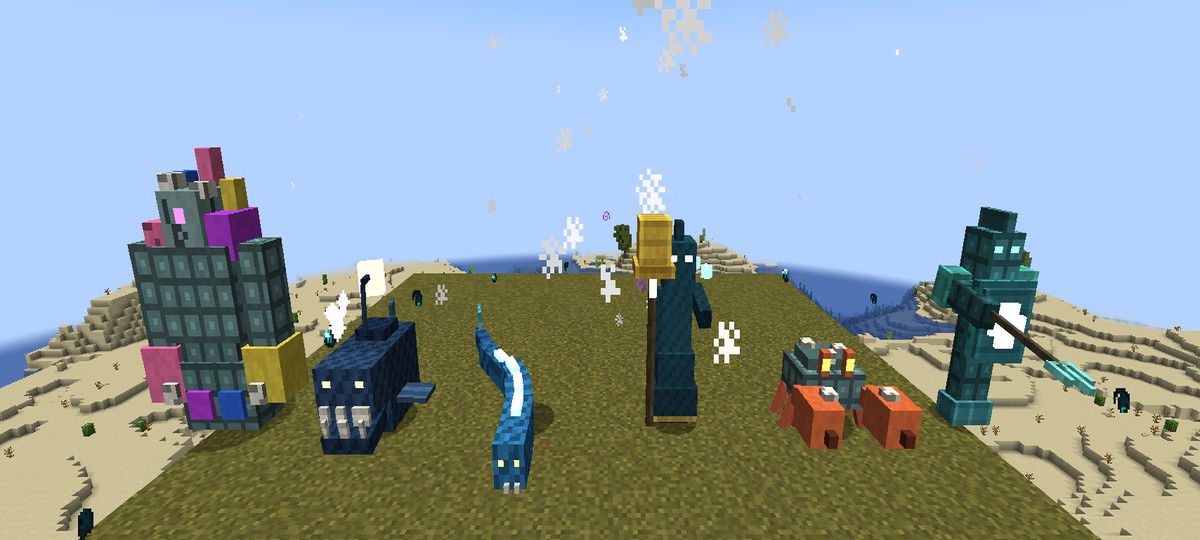
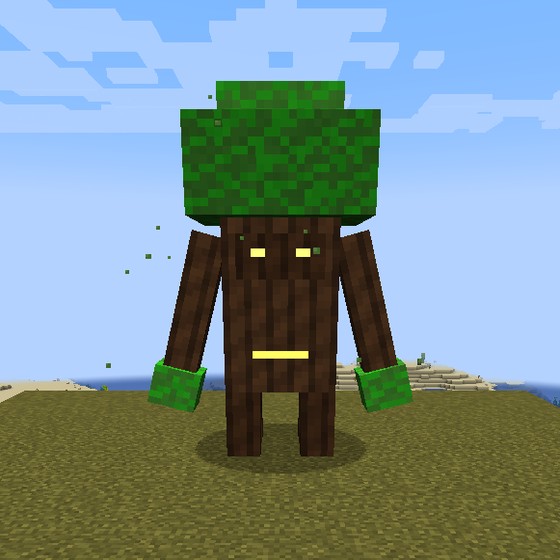
The trick: spore rooms. A poison haze drifts in from the walls; keep moving.
Vinebound · Spore Bloat · Thorn Archer · Jungle Stalker · Mossling · Temple Guardian. Boss: the Strangler Fig, a walking tree with roots in everything.
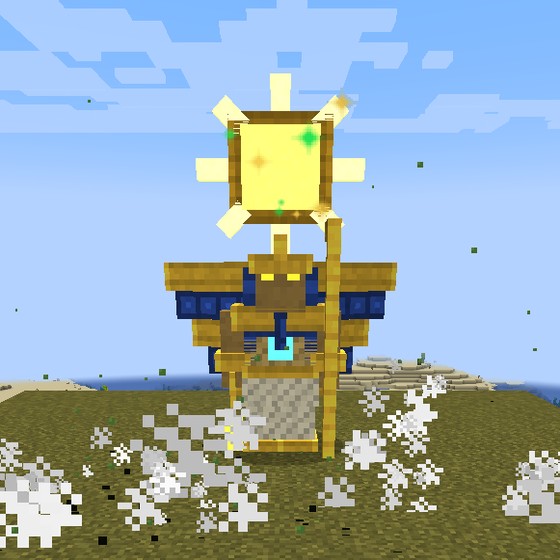
The trick: floors crumble into pits mid-fight, and the walls crack open for scarabs.
Sand Wraith · Scarab · Mummy · Tomb Archer · Sand Golem · Sun Priest. Boss: the Sun-Eater Pharaoh.
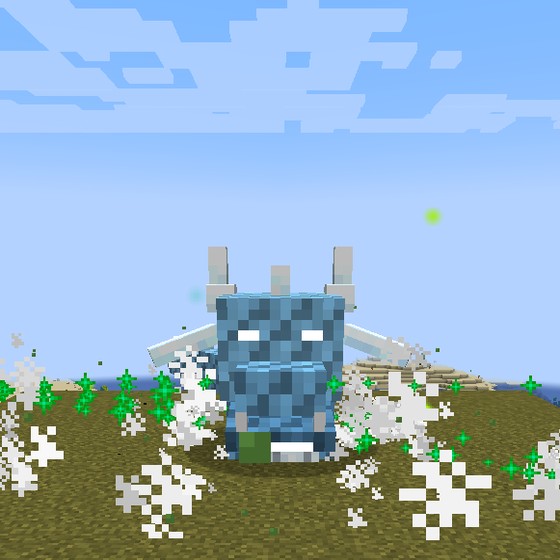
The trick: blizzard halls. Stay near the braziers or freeze; the blue ice is slippery.
Ice Wraith · Yeti · Frostbound · Shardling · Snow Stalker · Rime Totem. Boss: the Winter Wyrm.
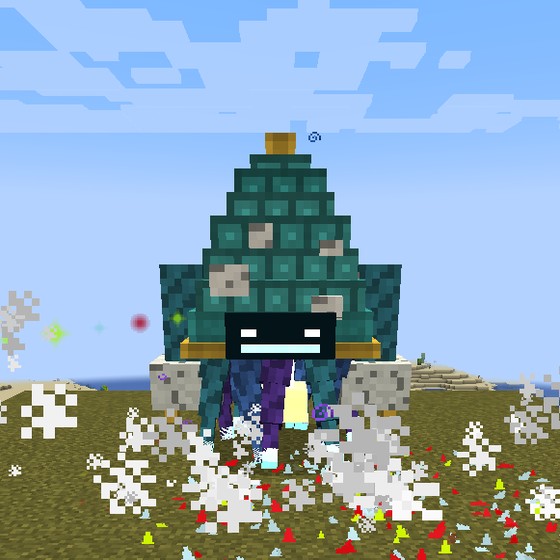
The trick: halls flood while they fight, and drain when you win.
Tide Knight · Abyssal Angler · Riptide Eel · Coral Brute · Bell Acolyte · Barnacle Crawler. Boss: the Abyssal Bellringer.
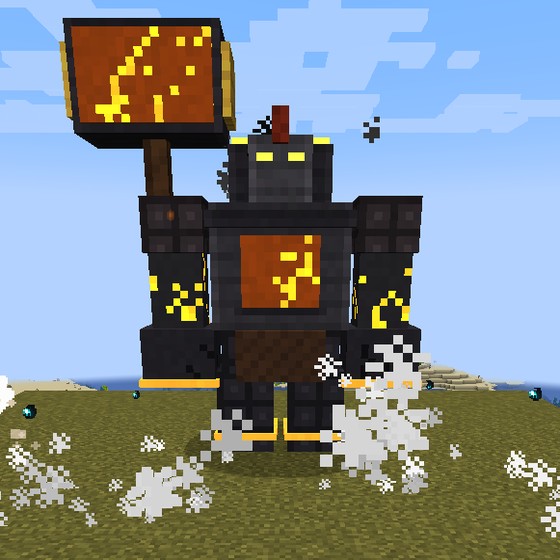
The trick: the floor turns to magma in pulses; lava waits behind the bars.
Magma Hound · Forge Golem · Cinder Imp · Slag Slime · Anvil Smith · Bellows Wraith. Boss: the Ironmonger.

The trick: silence rooms where no word works, and shelves that move.
Book Wraith · Shulker Turret · Ink Shade · Wardenling · Page Swarm · Archivist Golem. Boss: the Librarian, who steals words.
Four great bosses mark the ages of your gear. Each fight is built for a group, and each one listens to you.
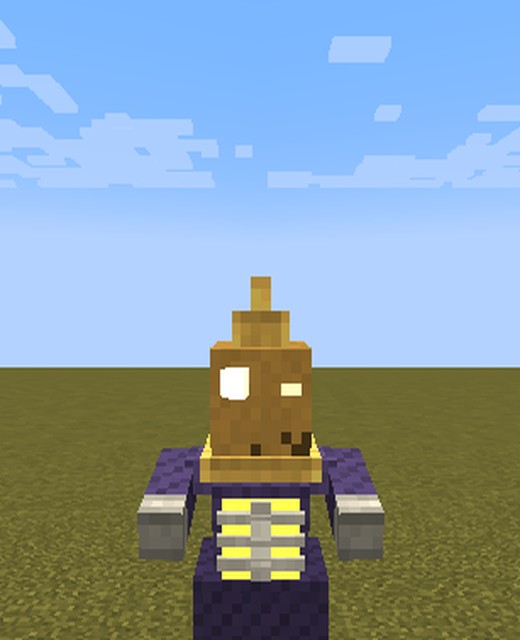
Three bell-headed monks sing in a flooded cathedral, and while they sing they heal. Break their song: step into it, or shout it down. And when the great bell starts to swing, find a pillar.
Summon: underground, below y 20, at night, ring a Cracked Bell.
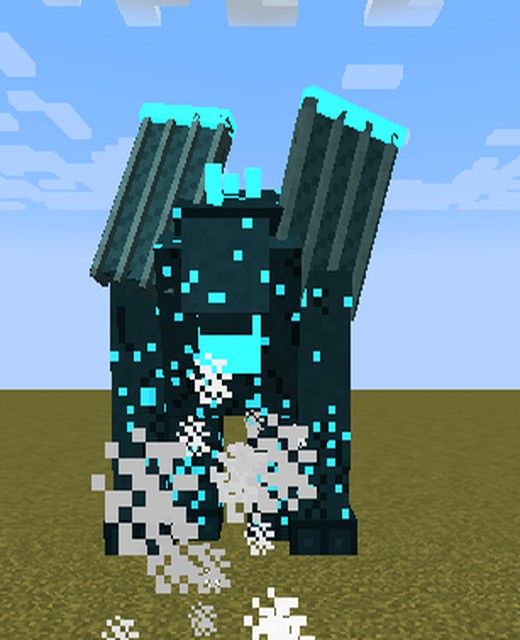
A blind colossus that hunts by sound. The loudest player is its target, so one friend screams while the others whisper and flank. Its ears are its weakness, and it hears through the floor.
Summon: in an Ancient City, be loud. Three shouts are enough.
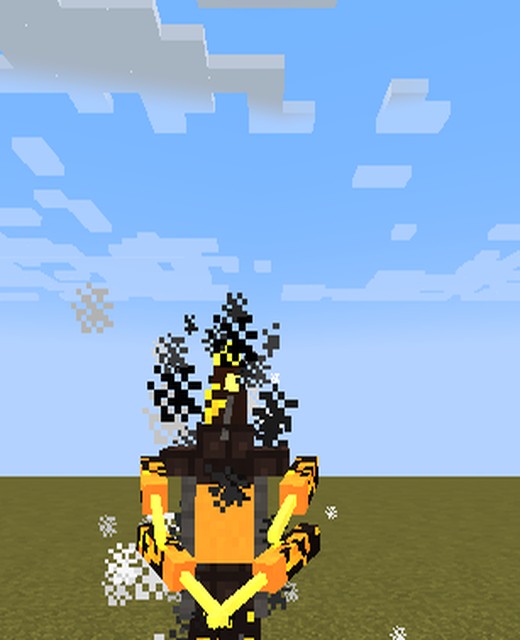
A conductor of cinders whose beat everyone can see. The floor erupts on his rhythm, so learn it and dance it. A Bard can fight his tempo, and a Mage's frost has its uses.
Summon: place a Cantor's Candle on a bastion's treasure floor.
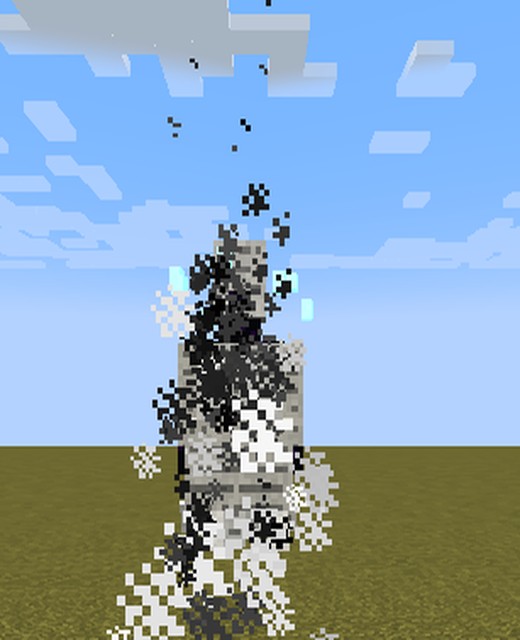
A figure of paper and silence that takes words away, then the floor, then more. It can only be finished by many voices at once.
Summon: on the End island, after the dragon, everyone says "together".
Five smaller fights for one to four players. Summon them at a Trial Altar with a cheap item, or meet them rarely in the wild. They give catalysts, materials and plenty of experience. Each one changes twice as it weakens.
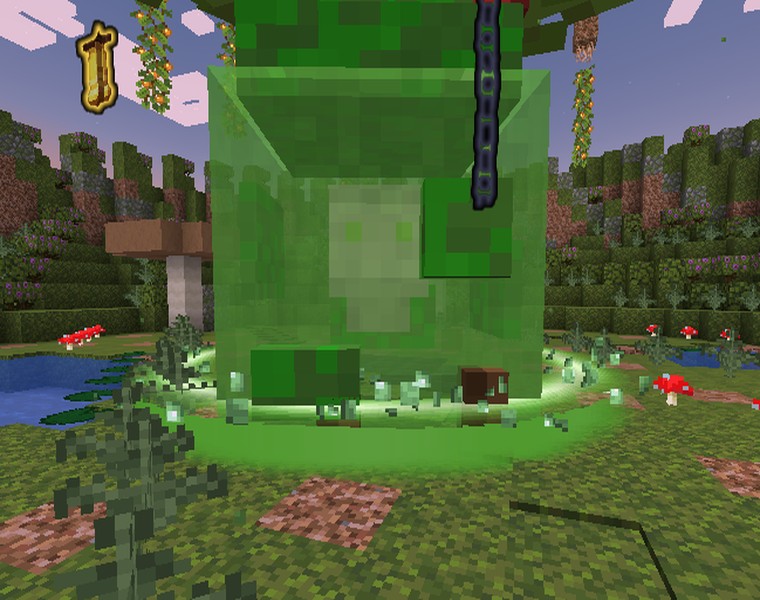
A moss jelly with a garden on its back. It splits, it rolls, and then it blooms. Mossy Lure.
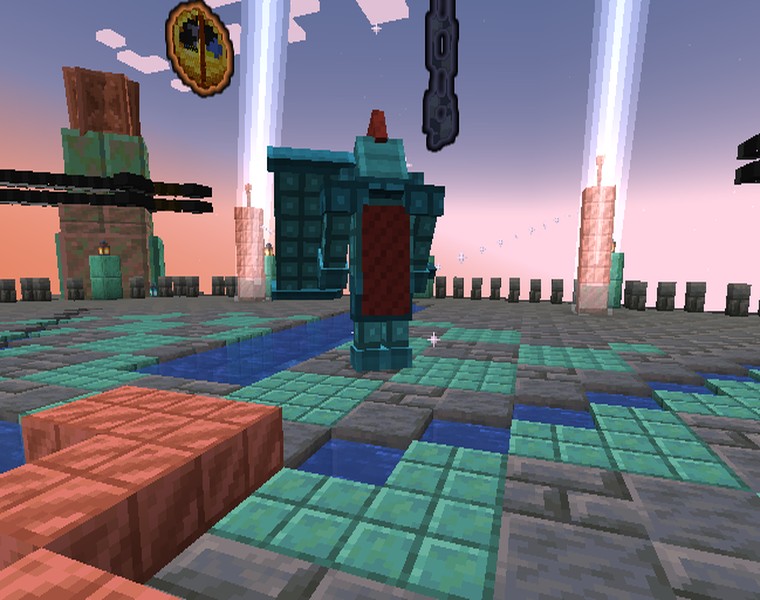
Grows stronger as he rusts. Water and axes scrape him back. Rusted Helm.
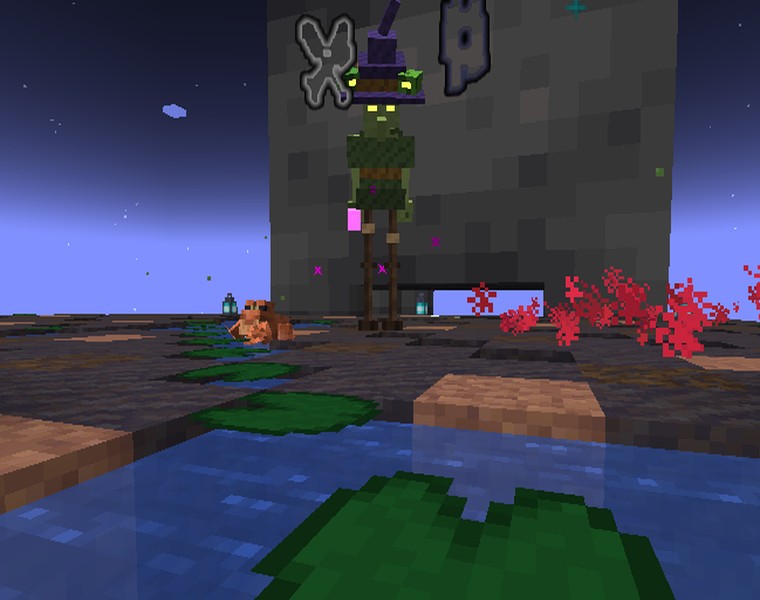
Frogs guard her, and her stilts carry her high. Bog Charm.
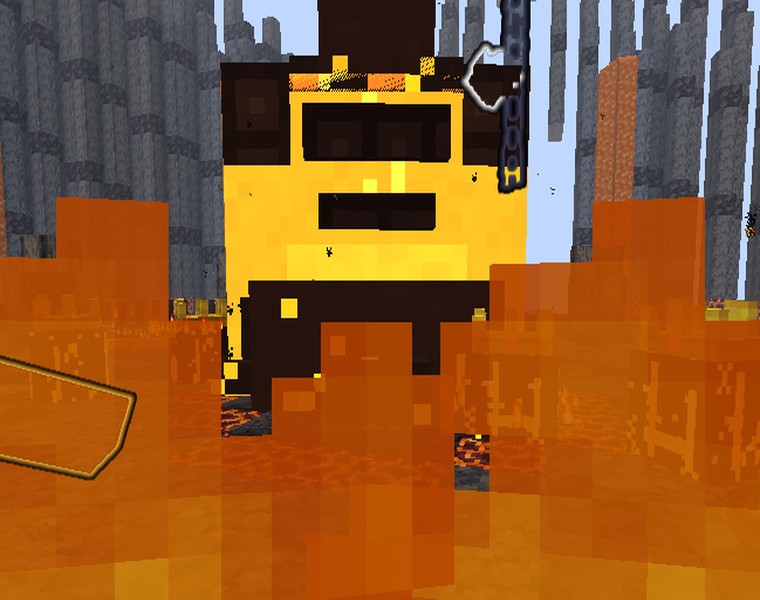
A crowned cube that splits, and finally cracks open. Magma Crown.
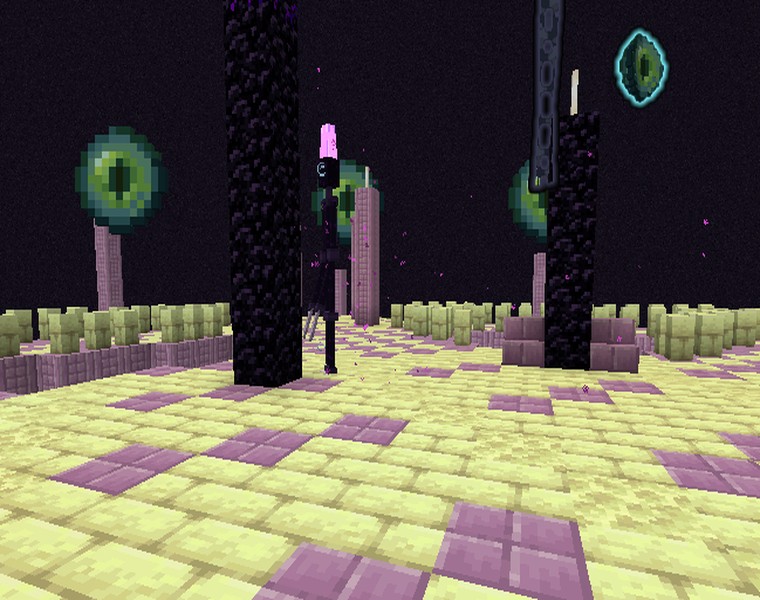
Hunts the weakest. Look at it, and keep looking. Void Pearl.
Every great and lesser boss fights in its own arena, built fresh for each fight in a sky outside the world. Everyone standing near the summoning is taken along and brought back afterwards.
Health grows with the number of players, and so do the adds and hazards, so four friends stay busy. Every big hit is announced: a ring on the floor, a line, a glow. Learn to read them.
Settle it in the arena. Nobody loses anything but their pride.
Type /duel <name>. Your opponent gets a message with [Accept] and [Decline] (or /duel accept). The challenge lasts a minute.
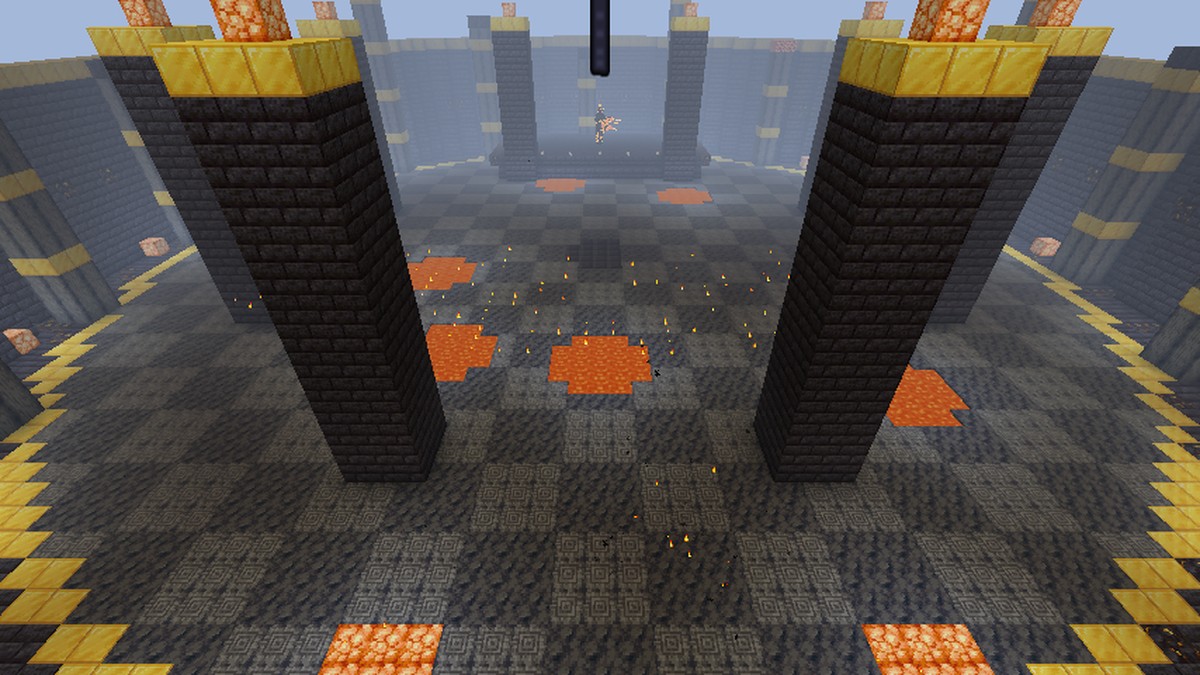
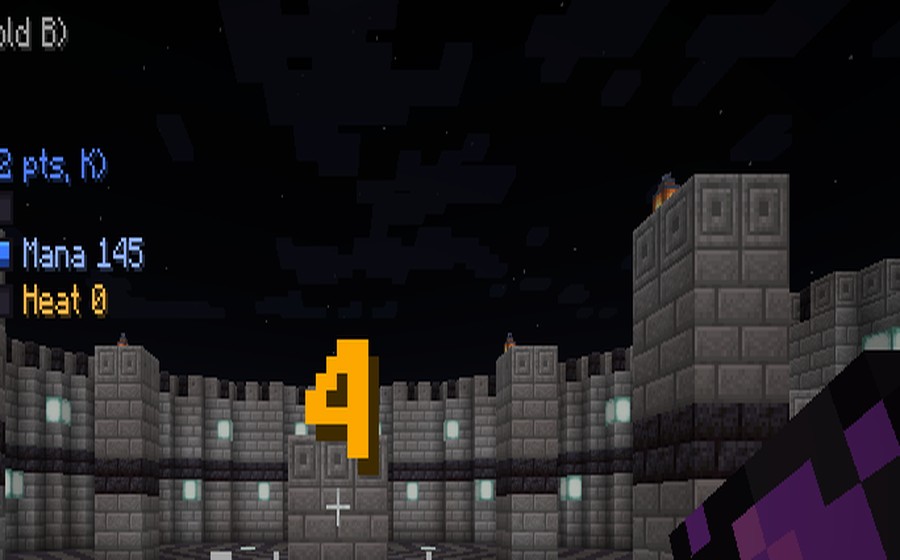
Both of you are taken to a lit arena with cover pillars. After a five-second countdown: fight. Every word and every calling works.
Nobody dies. The blow that would kill you ends the duel: the winner is announced to the server, both of you are healed, and three seconds later you are both back exactly where you were, with every item and every level unchanged.
Leaving the arena, logging out or /duel leave counts as a loss.
Normally, words never harm other players or their pets, so you can cast freely in a group. With /pvp on, you accept that risk: when both of you have it on, your words, your pets and your minions can hurt each other anywhere.
PvP is always off inside the Delves and boss arenas, so co-op stays co-op. In a duel it is always on.
Each calling has one word that is never taught. It wakes when you have beaten the Echo of yourself. Nobody can tell you what it is; you will know it when you hear it in your head. This is all we were allowed to write down.

The sky goes first. Then the ground remembers you,
and every step you take is an argument it loses.

Light pours into one point until there is no more room.
Then, for a heartbeat, the world forgets to make a sound.

A door opens above you, and it is hungry.
Everything you can see begins to fall upward.

From so high that the hunt looks small,
one arrow, and then a thousand, and then the pack.

Drums first. Then the whole battlefield keeps time,
and the last chord is the loudest thing you will ever hear.
| B (hold) | Speak a word (push-to-cast). Warrior: roar. Bard: hum. |
| R (hold) | Ability wheel, no mic needed. |
| K | Skill tree (or pick a calling). |
| J | The Codex. |
| Controls › Callings | Open-mic toggle, quick keys 1–4, the talk key itself. |
| /duel · /pvp | Chapter VI. |
Say words the way you would say them to a friend: clear, not shouted. Holding B slightly before you speak helps.
Big words have a ring that shows where they will land. If you can see the ring, so can your friends.
A dramatic moment may take the camera for a second. Any movement key gives it back immediately.
Some spells break soft blocks. Blast-proof blocks never break, and arenas and Delves are protected.
| Words aren't heard | Check that Minecraft may use the microphone (System Settings › Privacy). If a key is shared with another mod, rebind the talk key. The voice line top left tells you what was heard. |
| Wrong microphone | Callings tries other inputs if one stays silent. You can set one in config/callings/voice.json under "microphone". |
| Voice chat | Simple Voice Chat and Callings share the mic; push-to-talk on voice chat keeps them apart nicely. |
| Camera moments | "cinematics" in the same file: full, short (default) or off. |
| Stuck in a Delve | The exit pad in the first hall always takes you home (the key is lost). |
The Codex knows more than this handbook. Chapter VII knows less on purpose.
Speak, and the world answers.